



Amsterdam & Dutch Real Estate 2026: An In-Depth Market Analysis
Exclusive 2026 Amsterdam housing market analysis. Rent trends, price per sqm, impact of the Affordable Rent Act, ABN AMRO forecasts, and expert advice for a successful relocation.
HOUSING
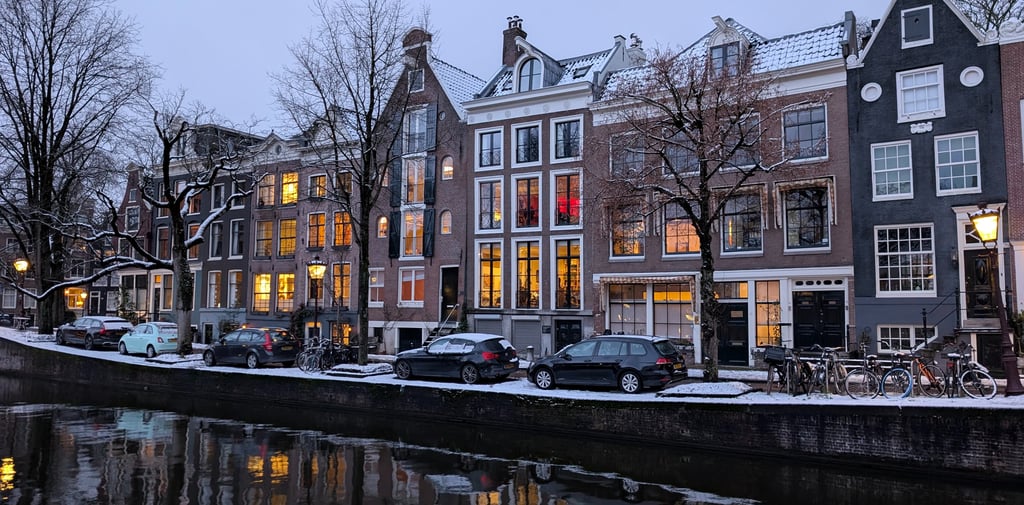
2025 concluded with a remarkable performance, characterized by an estimated 8.6% increase in house prices and a record-breaking 239,000 transactions. At Amsterdam Apartment Advice (AAA), we observe that despite global economic uncertainties, Dutch real estate remains a premier safe-haven asset. As we move into 2026, the market is entering a transition phase where robust income growth and a structural supply shortage continue to outweigh the impact of slightly rising interest rates.
Amsterdam, the Epicenter of an Unprecedented Housing Crisis
2026 marks a historic turning point for housing in the Netherlands. While the entire country is feeling the pressure of rising prices, Amsterdam remains the epicenter of extreme market tension. For expatriates, families, and investors, the capital has become a "two-tier" market where speed is no longer a luxury, but the sine qua non for success.
Between record-breaking rents and a supply that is evaporating under the weight of new regulations, navigating Amsterdam’s real estate sector now requires surgical expertise. At Amsterdam Apartment Advice (AAA), we decrypt the mechanisms locking the market and provide the keys to anticipating shifts in 2026 and 2027.
🏠 About us
At Amsterdam Apartment Advice, we support:
✔ Expat buyers entering the Dutch housing market
✔ Foreign investors looking for secure long-term assets
✔ Tenants seeking to transition into ownership
With local expertise, a strong network, and multilingual guidance (EN/FR/IT), we help you find, evaluate, and secure the right property in the Amsterdam region and beyond.
📩 Contact us to explore tailored opportunities in the Dutch housing market.
1. The Rental Sector in Amsterdam: A Market Under Regulatory Pressure
The January 2026 Pararius report confirms a heavy trend: the free sector is locking down, pushing tenants into increasingly complex situations.
The Impact of the "Wet betaalbare huur" (Affordable Rent Act)
Since the implementation of the Affordable Rent Act, the rental landscape has fundamentally changed. This law extended the Point System (WWS) to the middle-market segment (middenhuur).
The Mechanism: Moving forward, properties whose quality (calculated based on surface area, energy labels, and WOZ value) does not reach a certain point threshold will have their rents capped.
The Side Effect: Many private landlords, finding profitability insufficient under these new caps, are choosing to withdraw their properties from the rental market to sell them. This is the uitponding phenomenon, which is emptying the rental stock in favor of the sales market.
Rents Skyrocketing Despite Regulations
While the national average rent stands at €1,838, Amsterdam is shattering all records. The average price per square meter in the capital has reached €28.68, representing a 9.1% increase in one year.
The Combat Zone: Tension is highest for properties between €1,500 and €1,950. These are the most sought-after units for young professionals and expats.
Housing Permits (Huisvestingsvergunning): For many intermediate-segment apartments in Amsterdam, a permit is required. You must prove that your income does not exceed a certain threshold, adding an administrative layer for new arrivals.
The "War of Files": A Market Speed of Less Than 7 Days
While the national average for a property staying on the market is 18 days, Amsterdam’s reality is brutal. For a quality property in De Pijp, Oud-West, or the Jordaan, the process is often completed in less than 5 days.
AAA Advice: A file must be ready before the viewing. It should include your employment contract, last 3 payslips, ID copy, and ideally, a recommendation letter from your previous landlord. In Amsterdam in 2026, if you wait until the day after the viewing to send your documents, the property is already gone.
2. Purchasing Real Estate: ABN AMRO Analysis for Amsterdam
Homeownership remains the ultimate challenge. Despite rising rates, demand is not faltering, driven by growth in real household income (+1.2% projected economic growth).
Price Forecasts and "Overbieden" (Bidding Wars)
ABN AMRO predicts a price increase of 3% in 2026 and 4% in 2027. In Amsterdam, the average price of an existing home is approaching €500,000.
Overbieden: The practice of overbidding (often 10% to 15% above the asking price) remains the norm. In 2026, the price listed on Funda is almost never the final price.
The Impact of Rising Mortgage Rates
In late 2025, banks adjusted their rates upward (around 4% for a 10-year fixed rate). For an Amsterdam buyer, this means a slightly reduced borrowing capacity, offset by rising incomes and a tax system that remains incentivized for primary residences (interest deductibility).
3. Why is Rental Supply Vanishing? The "Uitponding" Phenomenon
Market research shows that 6.5% of homes listed for sale in the last quarter were formerly rental units. Investors are divesting because:
Taxation (Box 3): Property wealth taxation has become significantly heavier for secondary residences.
Energy Renovation: Properties with poor energy labels (D, E, F, G) are now difficult to rent or subject to low rent caps. Many owners prefer to sell rather than invest heavily in insulation.
4. The Social Paradox: Social Housing Under the Spotlight
The CPB study on "tenant-owners" reveals that 12,000 households occupy social housing while owning one or more properties elsewhere. In Amsterdam, where the waiting list for social housing often exceeds 15 years, this situation further tightens the private sector. These "wealthy" tenants often occupy well-located apartments in Amsterdam-Zuid or the Jordaan, blocking the natural rotation of the housing stock.
5. Construction and Ecology: Amsterdam’s Bottlenecks
Why isn't more being built? Amsterdam faces structural limits:
The Nitrogen Issue (Stikstof): Construction sites are frequently frozen to comply with emission quotas.
Power Grid Saturation: Some new districts are struggling to get connected, delaying 2026 deliveries until 2028.
Material Costs: Inflation in the building sector keeps new-build prices at record highs (average of €523,000).
Navigating the Real Estate Storm
The 2026 Amsterdam market does not forgive improvisation. With average rents at €1,838 and a rotation of less than a week for the best properties, the difference between those who settle serenely and those who fail lies in preparation and the strength of a local network.
Contact


Amsterdam, 1102 AP Frissenstein
Adress
BTW number : NL005011500B21
Company: JSP Advisory
KVK number: 93282583